


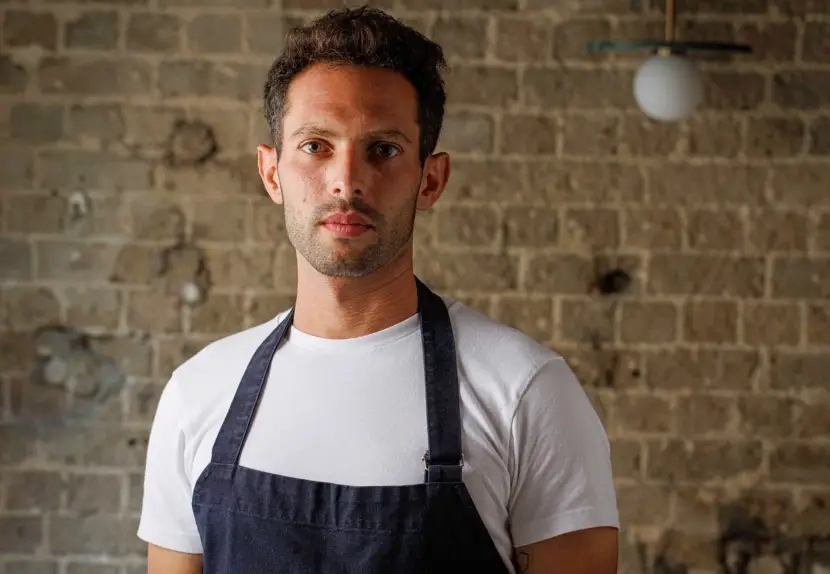
Raz Rahav arrives at OCD restaurant in running gear, having just completed a half-marathon along the Tel Aviv promenade. "Endurance sports, managing injuries caused by overtraining, and incremental progress served as an ongoing lesson for my personal conduct and our management approach at the restaurant," says the 34-year-old chef.
In the past five years, Rahav led OCD to third place on Middle East & North Africa's 50 Best Restaurants list, earned the international ranking's Sustainable Restaurant Award the following year, hosted Israel's prime-time culinary reality show "Game of Chefs," launched a wine bar named Tirza and a food venture called Tene, while also marrying and divorcing. That represents considerable mileage, matching the three-digit weekly distance he logs on foot.
Kitchen Transformation
Much like attending the theater or opera, arriving late to the tasting menu served for nearly a decade at OCD is ill-advised. Eighteen diners sit simultaneously in a horseshoe configuration facing the open kitchen, awaiting the performance presented by Chef Rahav and his three sous-chefs. The experience spans two and a half hours, offered twice nightly, six days a week.
Rahav stands in the center of the open kitchen, focusing on initial appetizers. Soft background music plays. "We tested every variation—silence, techno, classical music. Currently, low volume works best," he notes.
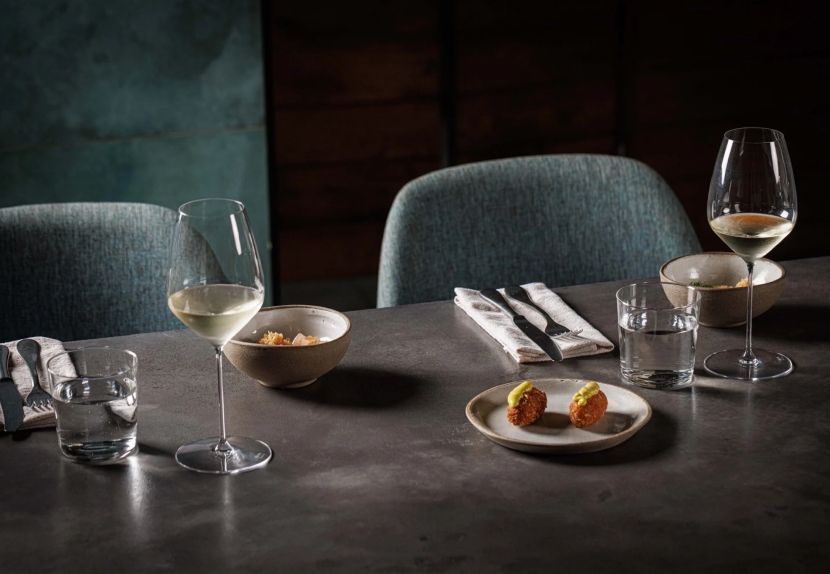
Sixteen courses unfold across the dinner. The menu evolved into a hyper-local concept dependent on vegetables grown exclusively for the venue by regional farmers. Deconstructed duck breast and classical French duck rillettes previously featured prominently; today, his house-made olive oil jam and a chicken broth inspired by his late mother define the culinary direction. Local flavors dominate, paired with personal touches, fewer components per plate, concise course explanations, and a relaxed atmosphere. "Sometimes earlier tasting menus make me feel slightly embarrassed," he remarked several months ago while discussing OCD's transformation.
Dish of the Day
Rahav entered commercial kitchens at age 21, quickly recognized as a promising talent. His initial path into food stemmed from an eating disorder and anorexia that left him severely underweight. "To encourage my eating habits, my parents began taking me to restaurants," he explained in a previous interview. That exposure sparked his passion. After preparing precise dishes at home and sharing photos on Instagram to growing attention, he joined the professional kitchen at Popina in Tel Aviv. "Owner and chef Orel Kimchi accepted me without prior experience, and I quickly began planning my own venture. I always moved fast—even entering the world prematurely as an infant," he recalls. "The daily routine at Popina, waking early to taste dishes, aided my recovery. For a long time, tasting food presented a challenge, prompting me to ask Kimchi to taste on my behalf. When leaving the restaurant for an internship in London before opening my own establishment, I wept as though Popina were closing. Deep down, I recognized that my chapter as a line cook had concluded."
In 2017, he opened OCD, drawing inspiration from similar intimate supper club formats in New York. Throughout its decade of operation, the restaurant became a staple in international media features highlighting Tel Aviv's dining scene. The dining room remains fully booked, requiring reservations months in advance. "Mid-November has an available table," the host announced upon request.
"OCD remains an integral element of Tel Aviv's restaurant scene, which maintains impressive standards despite years of war." Similar to seasonal local establishments like Chef Aner Zalel's Trisar, nearly every element is produced in-house based on weekly agricultural yields, complemented by pickling, fermenting, and preserving techniques. "Freezers store items exclusively for the pastry station, and no ingredients carry over unchanged to the next day. Produce is either served fresh or transformed into miso, koji, and similar fermented components. Fresh grapefruit dictates its appearance on the menu; outside its season, it vanishes. The restaurant shifted mindsets for local diners and regional chefs, because preparing plates from commercial powders or repeating identical risotto recipes for three consecutive years feels uninspiring."
"Chefs often face questions regarding their transition from fine dining to casual formats, both locally and internationally. Many attribute the shift to current economic conditions, yet numerous restaurateurs aim to dodge critical scrutiny by lowering baseline expectations preemptively. A culture of shortcuts begins during culinary schooling. Graduates paying high tuition fees occasionally struggle with basic knife skills, yet request promotions within two months," he notes.
Leave the Tahini alone!
Your kitchen omits tahini, for example—a staple of Tel Aviv cooking. "True. I did not grow up with tahini or spicy food, despite being deeply local. Just like me, OCD is a local restaurant relying on farm-to-table ingredients, custom-grown vegetables, and regional produce. That is a fact, but we do not broadcast it constantly because defining a restaurant that way feels outdated."
"Do you think your new restaurant at the Mandarin Oriental Tel Aviv, set to open in the coming year, will feature tahini?" Rahav laughs. "Time will tell. Regarding tahini specifically, it lacks sufficient interest for me and does not appeal to my personal taste. That represents neither a rigid policy nor a commitment—we previously featured a dish with a sesame and lemon emulsion. I simply refuse to operate another restaurant offering standard beef tartare alongside tahini," he sighs.