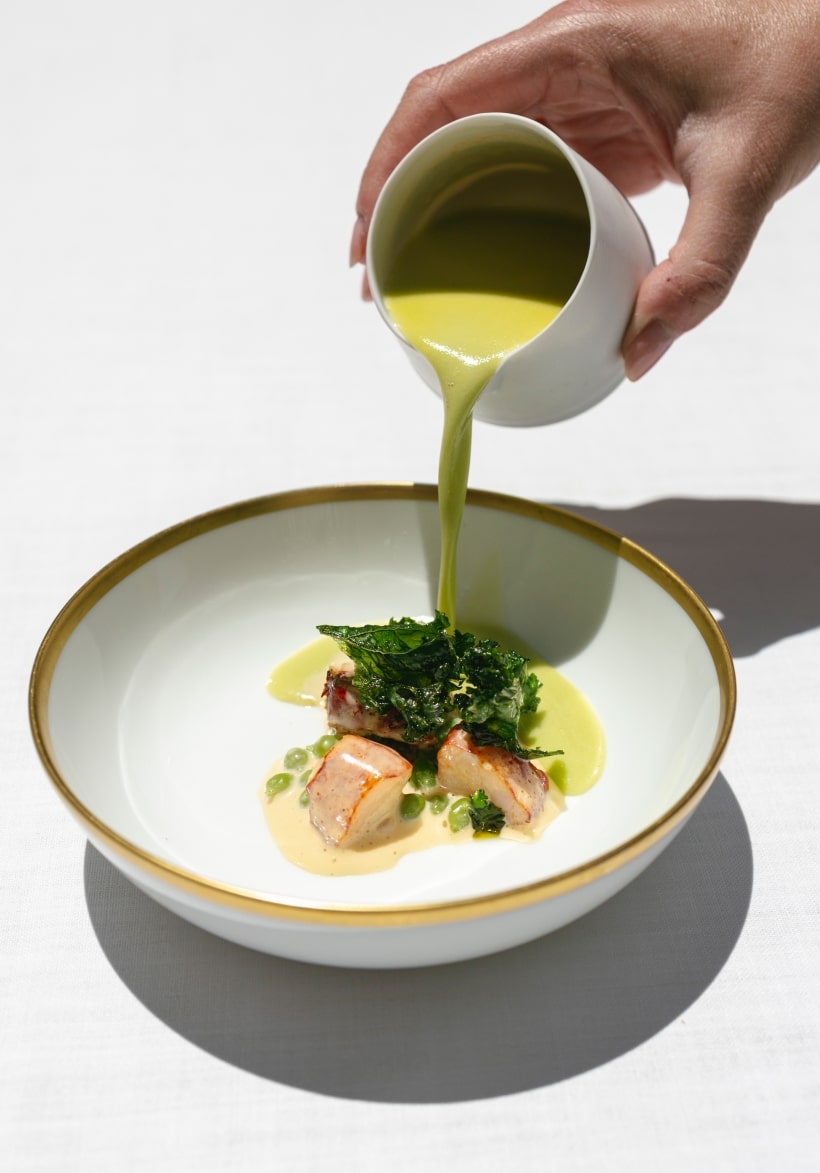
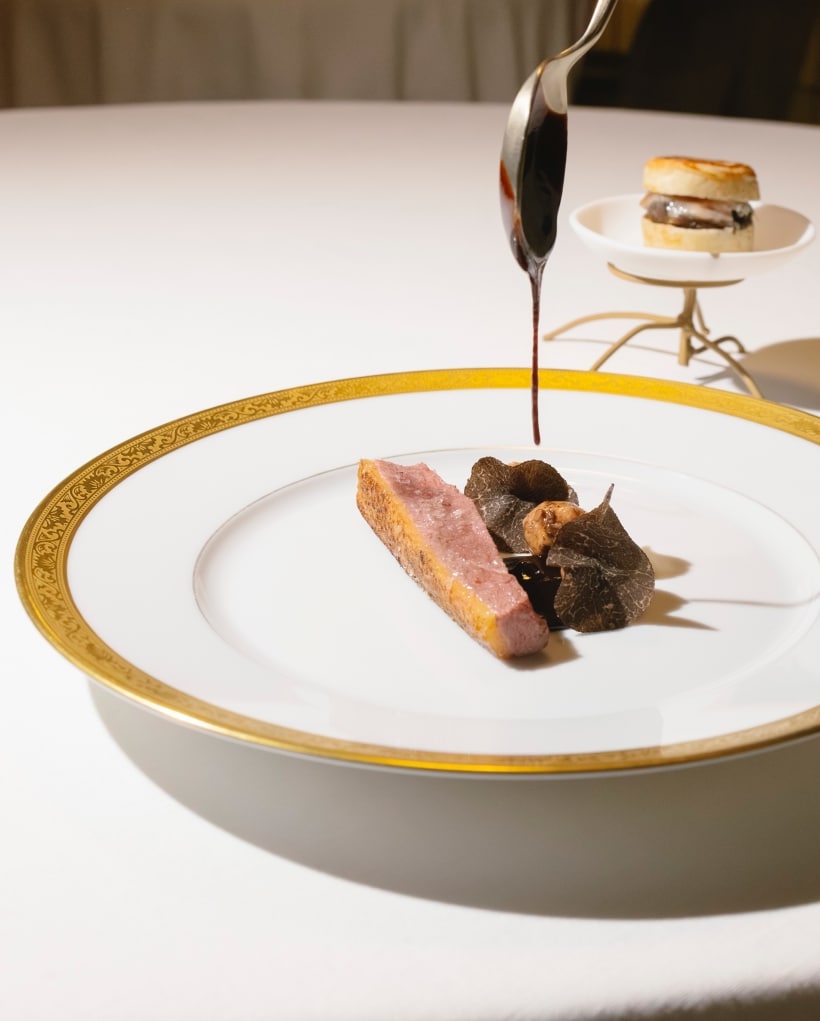
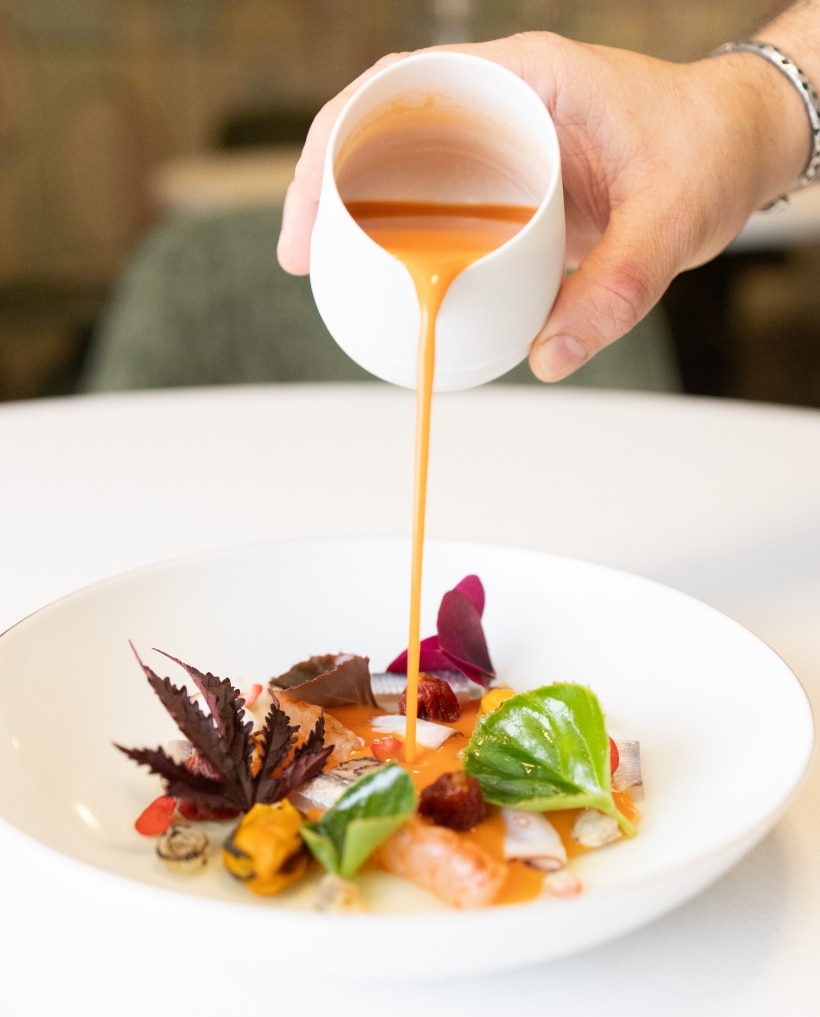
Juan Luis Fernández walks towards one of the 6 lucky tables in his 2-Michelin-starred restaurant, Lú. He pours a velvety, 50-year-old Sherry sauce over cuts of aged ocean fish, served on gold-plated Limoges porcelain
Lú, the Andalusian way of saying luz, the Spanish word for light, delivers a world-class experience that holds its own on any global stage.
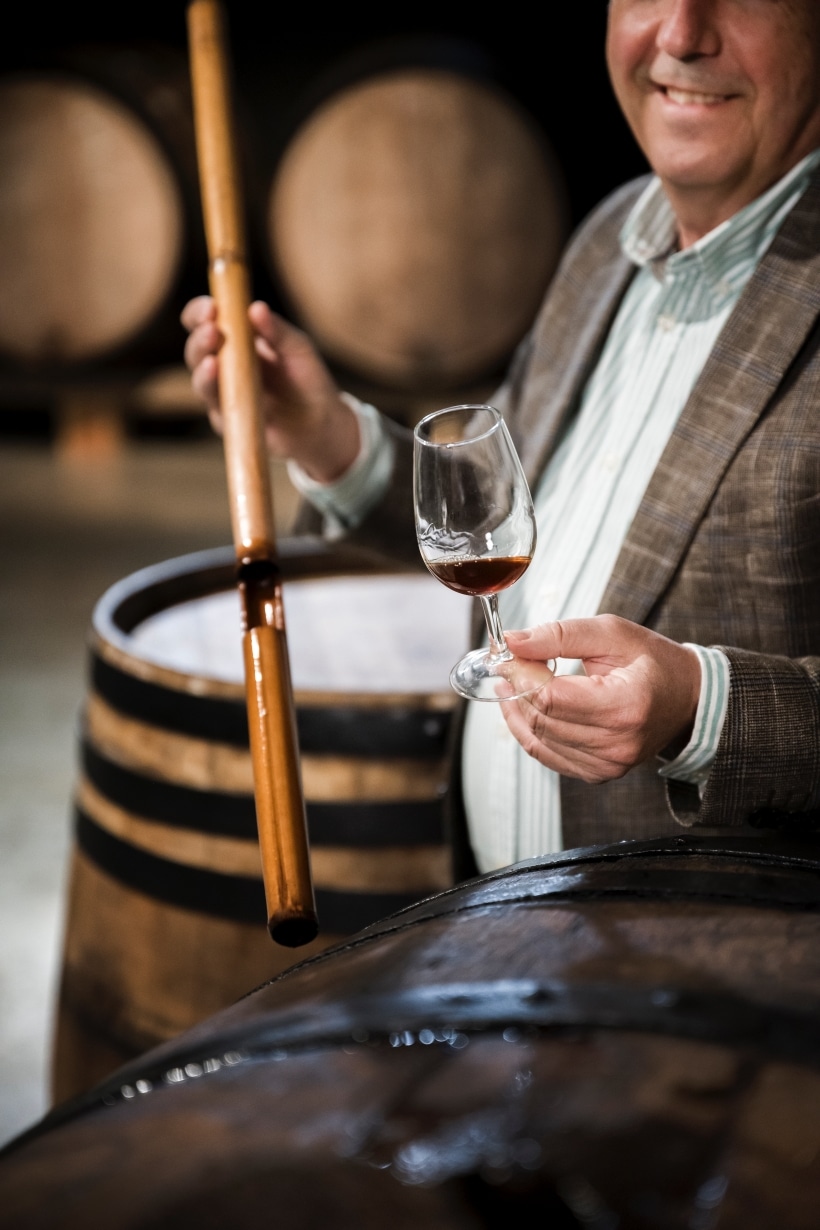
Alongside a menu of local ingredients shaped by French technique, the restaurant houses one of the world’s largest Sherry archives, featuring bottles that span over 120 years. A rare, once in a lifetime opportunity to pair Fernández’s exceptional Andalusian cuisine with near-perfect 100-point wines, offered at prices, starting at less than 10 Euros a glass.
The menu features over 700 labels, with many of them available by the glass. The selection changes on a daily basis, according to the bottles the sommelier team at Lú managed to get their hands on. "A neverending chase. In the current time window, you can still find treasures here like barrels with wine over 100 years old from wineries that closed. You just have to constantly have your finger on the pulse," Juanlu sighs. Since Sherry hardly spoils, one can still regularly find in the city closed and intact bottles, some forgotten in the liquor cabinets of winery employees or collectors. LÚ’s average age per bottle is 40 years.
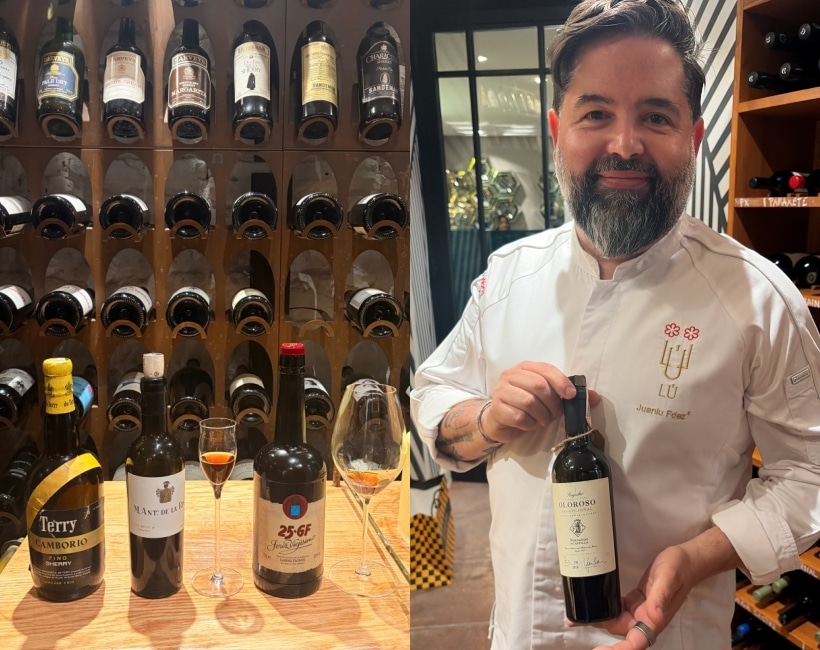
During my last visit to the restaurant, glasses were filled with Sandeman Amontillado, which has not been produced by the Spanish branch of the eponymous winery for over 50 years, as well as Fino from the legendary and now defunct Domecq and a 110-year-old Palo Cortado, which was aged in a barrel for 40 years before bottling. Need we say more? A true treasure.
From resourceful cooking to haute cuisine
Fernández (42), Juanlu in short, was born in a working-class neighborhood on the outskirts of Jerez’s center. A self-made visionary, who inspiringly succeed in staying true to his own authenticity and to the things that interest him and that he loves.
His grandparents who lived on the street where he grew up took a significant part in raising him. "I have been cooking since the age of 5 with my grandmother, 95-year-old Josefa, whose kitchen was shaped in light of the Spanish Civil War years and the long decades of shortage and austerity it brought.
Even in the eighties, the very local food that she prepared, ‘Recetas de Aprovechamiento’, was based on maximum usage of the little there was.
Dishes rich in legumes with lentils and chickpeas, Fideos con caballa noodle and mackerel stew; Sopa Tomate, a kind of local shakshuka – and carrot and beet salads, of the kind rooted in the long Moorish heritage of Andalusia and that can also be found in Morocco, located within 100 miles as the crow flies from Jerez.
Everyone here in my opinion is a little Jewish and a little Muslim if you look at their family tree, and this stands out to this day also in the food of Andalusia and particularly of Jerez," he says.
A considerable part of the local kitchen's recipes that he grew up on stars today, in haute variations, at LÚ restaurant which combines seasonal stews in the changing menus of the restaurant.
At age 14, Juanlu began working in his uncle's bakery and in local patisseries. Later, he professionalized as a chef and moved to the Basque Country. There he worked in Martín Berasategui (3*), located in Lasarte and learned the foundations of haute cuisine, also falling in love with the classic French kitchen.
In 2007, he returned to Andalusia and founded Aponiente together with Ángel León, an adventure that turned him into one of the most esteemed chefs in the country. At the restaurant, Fernández was responsible for turning León's vision into reality: using plankton for food or creating sea-charcuterie from fish.
Aponiente's groundbreaking menu earned them 3 michelin stars in 2017. "A peak, after which I decided that it’s the time for me to make a change and set out on an independent path. I wanted to return home to Jerez in every sense, not only physically. Enough with the fish," he laughs.
LÚ was established in that same year and won a first star within 10 months and second star about three years ago, with Fernández being the first to win a them in the.
Reimagining Andalusian Heritage
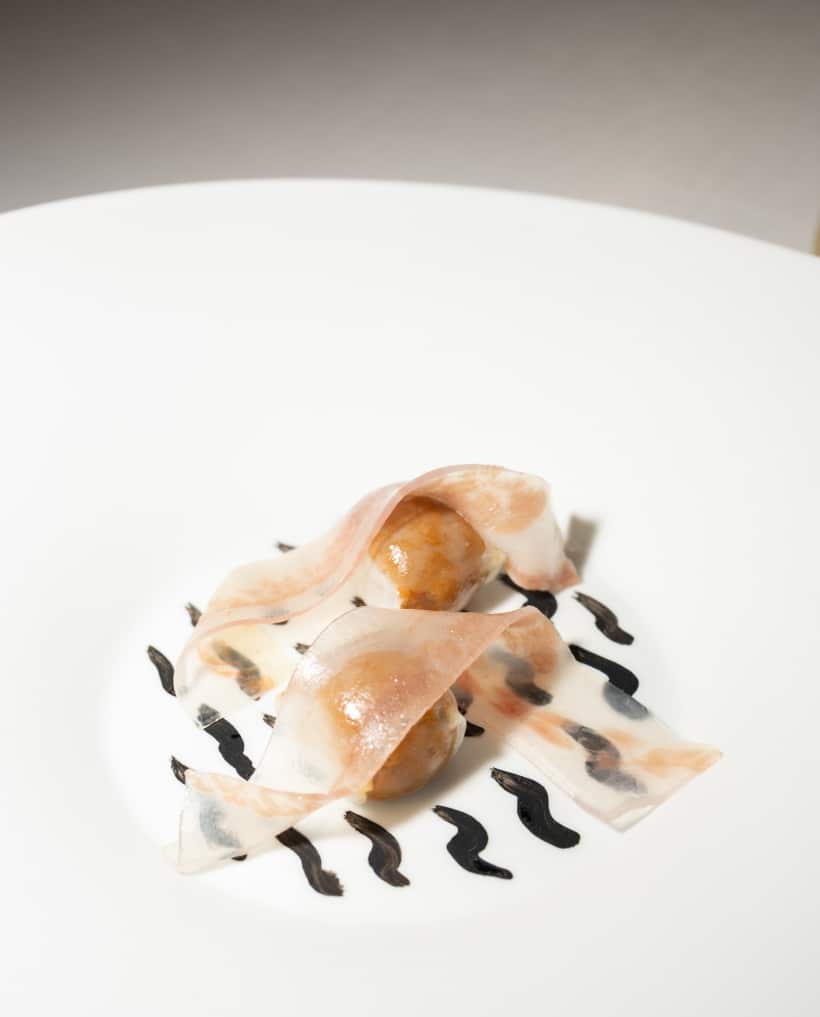
At the heart of Fernández's work in the restaurant, stands ‘Vanguardia de Retaguardia’: an innovative interpretation given to the region's heritage, with dishes that respect local cooking techniques and recipes, while incorporating techniques from French haute cuisine. Instead of using butter, Jura wine and balsamic vinegar for instance, Juanlu incorporates in LÚ Manteca Colorá lard, Sherry wines, and Jerez vinegar.
His decision to open a chef-restaurant in conservative Jerez cannot be taken for granted. "Dolce and I wanted to open a restaurant that would showcase our city’s cuisine, with 12-16 seating places and a focus on food and ingredients that I bring directly from producers in the province. We did not think about stars and guides; only after past clients from Aponiente requested a tasting menu did we decide to change concept."
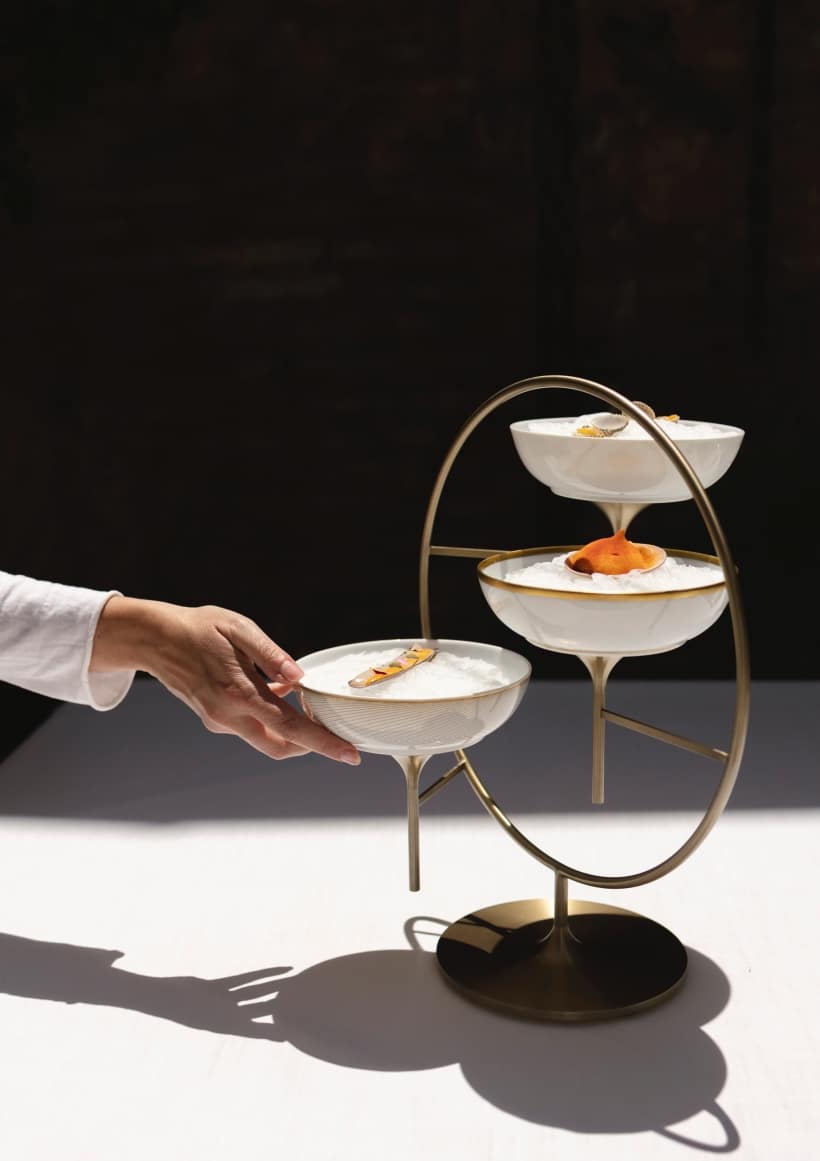
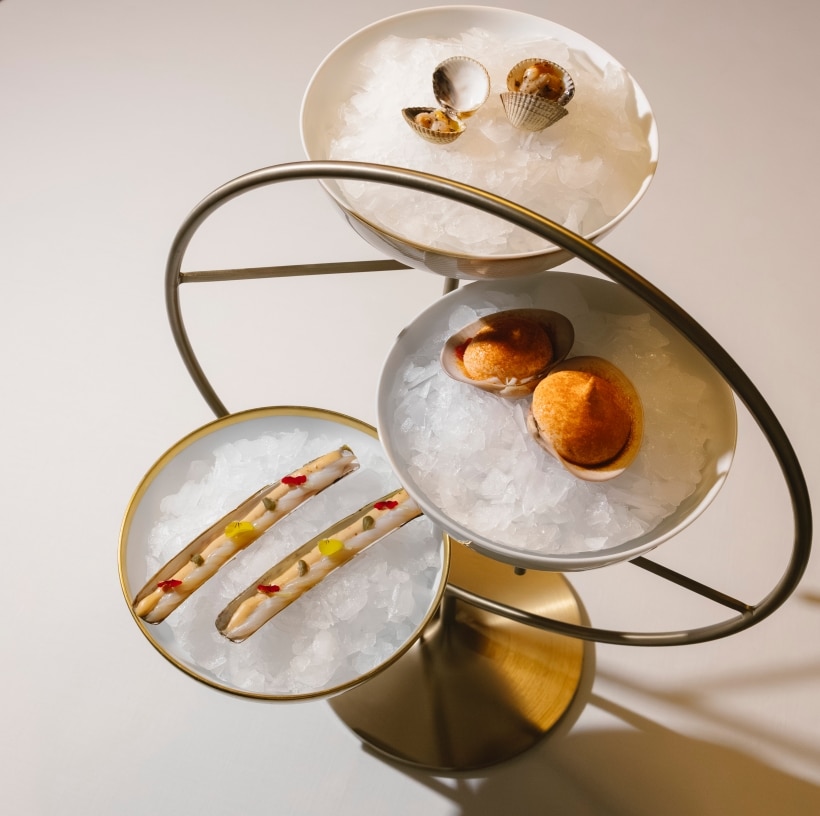
The tasting menu features a dazzling array of dishes, served in a series of flights. One inspired by the workers' meals of the winery employees in the vineyard, another inspired by the unique sea yield of the Cádiz region on its red shrimp and excellent razor clams. Everything is accompanied by Sherry, curated by the sommelier team and Fernández himself.
The prices are surprisingly fair. Jerez is one of the most affordable cities in Spain when it comes to food and wine, and a meal here will cost as much as 2 thirds less than Paris.
"We charge the minimum that grants us profitability. In Jerez we must be ambassadors of our wines and bring as much awareness to them.
Andalusia is a region of humble people, among the poorest in Spain. As a community, we did not know how to brand and do PR for our treasure. If Jerez were in France, all wine prices would have another zero at their end. There producers were heavily relying on the British market, and once the English stopped drinking Sherry as much as they did, the region’s fortunes faded, peaking in depression reaching its lowest point about 20 years ago. TToday, a younger generation is establishing gastro-bars and boutique hotels, and even defunct bodegas are being bought and reopened by a new wave of sherry winemakers. The city and its wine are starting to experience a revival, creating a momentum that still requires work from producers, the state, and the local government the producers, the state, and the local municipality."
Culinary revival
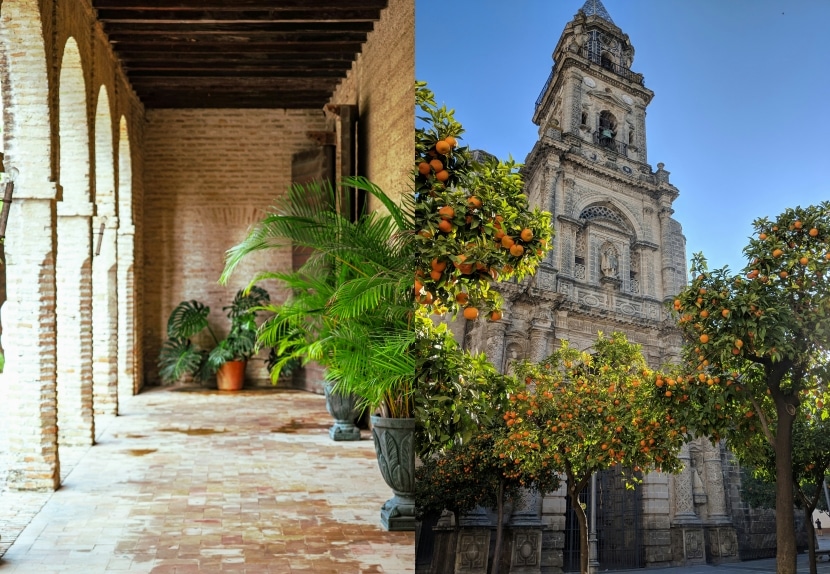
Jerez de la Frontera, Sherry in English, is a wet dream for culinary and wine enthusiasts. A European gastronomy capital, that its fortified wine produced here turned into one of the wealthiest cities in Spain in the 19th century. The country’s first railway line was laid here, connecting the city to the port from which its wines were exported to the United States and England.
Sherry was, up until the beginning of the 20th century, second in its prestige only to Champagne. A wine that can be painfully dry in the case of Fino or Manzanilla preparation styles, or a dessert wine in the case of Pedro Ximénez and Cream. Sherry’s heyday saw it celebrated by the era’s greatest literary voices, most notably in Edgar Allan Poe’s classic, The Cask of Amontillado.
A series of erroneous marketing decisions brought a decline in the prestige of the Sherry. Its past’s splendor is still evident in Jerez’s center, studded with Palaces and villas, as well as historical tabancos and flamenco bars.
Fernández, a Jerez native, returned to his hometown about a decade ago, after a career in some of the best starred restaurants in the world, with the aim of restoring its former glory.
Alongside his wife, Dolce, who oversees the restaurant’s hospitality experience, his group has become the driving force behind a culinary revival, breathing new life into the city, and awakening it from its slumber.
Alongside LÚ and in Jerez, Fernández founded Michelin recommended Bina Bar in Jerez, where he offers a refined twist on the signature dishes from his Michelin-starred flagship—such as his famous steamed tuna bun or the shrimp in Ajoblanco. His adjacent specialty coffee shop, Krombol, offers both modern and traditional local pastries that draw on the expertise he acquired as a young baker in his uncle’s bakery.
Other than Lu’s power couple, the new culinary wave of Jerez is led by young chefs like Javier Delgado Vadillo and his partner Larissa Galeano, Rocío Benito and Juan Carlos Vidarte from Albariza wine bar, and Sherry’s new wave winemakers: Alberto Orte, Willy Pérez, Ramiro Ibáñez and Joaquín Gómez.
Many of them will take part in El Duende X series of events revolving around Sherry and bringing to the city some of the world’s leading chefs for special dinners at LÚ restaurant in collaboration with the new local winery Serdio: the Roca Brothers, Albert Adrià from Enigma restaurant in Barcelona, Aitor Arregi from Elkano restaurant, Brazilian chef Janaina Torres, the 50 Best Female Chef of the Year, Karime López of Xaak restaurant in Mexico (and foremerly Osteria Gucci restaurant in Florence), and more.
In recent years, Fernández also begun to spread out internationally. After a series sold-out of pop-up events of Spanish food and Sherry around the world, last year he established a first restaurant complex outside of Spain, in the Lubomirski Palace in Krakow. This summer he will establish another restaurant in Murcia, Spain, in the historical Arco Square.
"I am from Jerex and all that I do in the last decade is to strengthen my community and tell the special story of the city and of its wine industry. What’s next for me? My dream is to unite all the places in the city in one château, with a boutique hotel, a winery, a restaurant, and a wine bar."