


Yogurt was a staple of my childhood kitchen. A four-pack of white "Danube" tubs sat permanently in the fridge, ceremoniously transferred into a small bowl at dinner for us to add to the food in our plates.
We mainly used yogurt as a cooling element over warm rice and stews, to make cacik (the original Turkish version of tzatziki), or whisked with water and ice for ayran.
For years, the insuffreble scraping sound of a spoon trying to scoop out every last bit of yogurt from those Danube containers formed the soundtrack to my family meals.
More recipes on Rex:
- Chraime: Libyan Fish stew
- Roy's Black Sea style stuffed cabbage
- World's easiest and tastiest banana cake
I was reminded of my childhood yogurt rituals last summer when visiting in Almaty, the financial capital of Kazakhstan. There, at chef Nikita Zakhrow's restaurant Fika, I tasted local okroshka for the first time. Saying it blew my mind is an understatement.
The combination of basil and fresh coriander with the soup's smoky notes and crunchy root vegetables proved addictive. It was one of the few times I ordered an immediate second serving of a dish I had just finished. Recipe below.

So what's actually okroshka?
Fermented milk, yogurt or ayran, comes full circle here, returning to the region where Mongols and Turkic nomads first introduced it to Europe and the Balkans at the turn of the second millennium.
Okroshka originated during the 18th century in the Volga River delta villages. The name derives from the Russian verb kroshit, meaning to chop into tiny pieces. Burlaks, barge haulers along the riverbanks, ate bowls of dried fish, softened in kvass, fermented grain drink, with some radish and turnip chops. Over time, cuts of meat or sausage replaced the fish, establishing cold okroshka as a summer staple in Russian cooking.

The Kazakh version emerged under a century ago, shaped by internal Soviet migration into Central Asia.Here, local ingredients took over: instead of kvass, cooks turned to native ayran or kefir, and instead of industrial sausage, they used zhaya, smoked horse neck – a mainstay of Kazakh culinary heritage dating back to their nomadic roots.
Chef Zakhrow added a contemporary twist to the dish with abundant fresh herbs, particularly basil and coriander. Definitly worth a special trip if you visit the city during summer or autumn, when this dish's vegetables reach peak season.
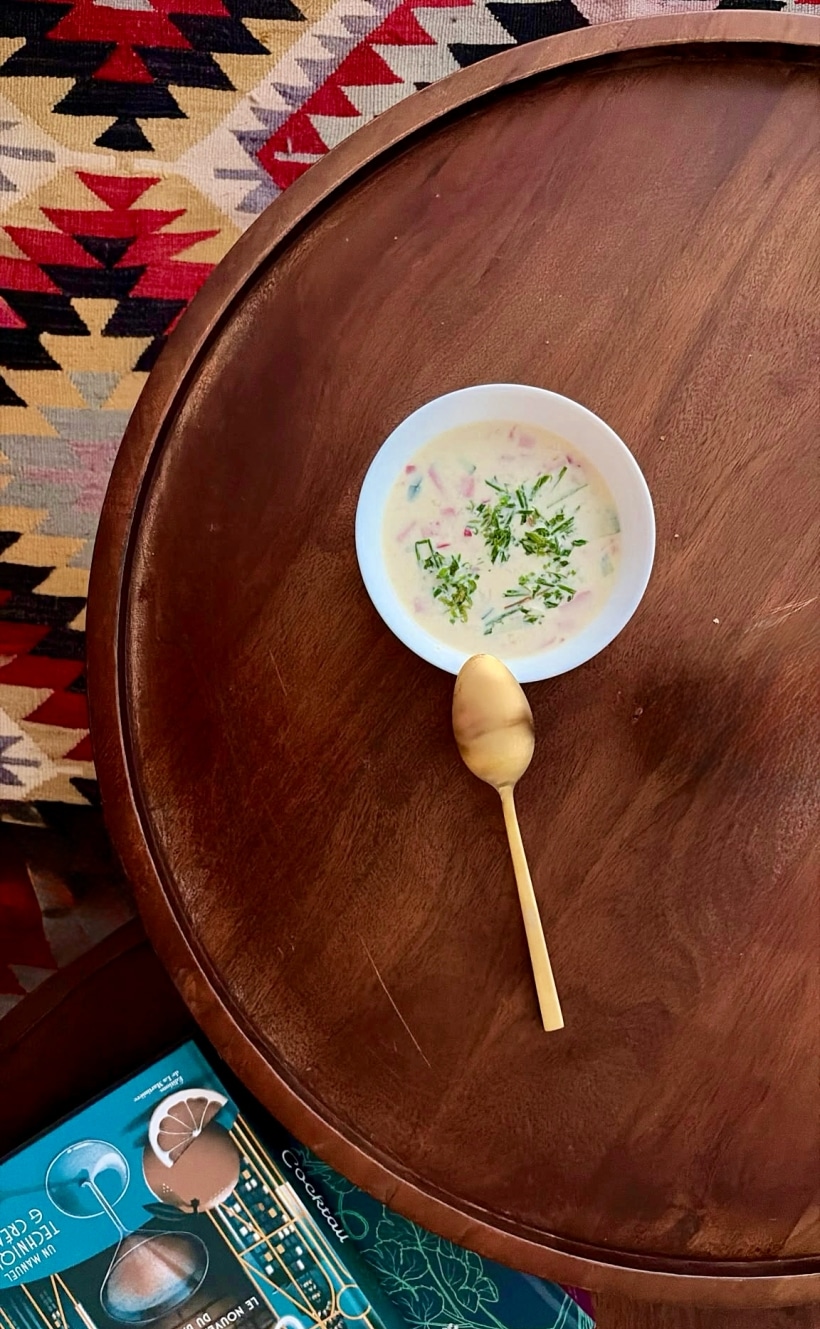
Okroshka – Cold Yogurt Soup
The recipe I made at home adapts Nikita Zakhrow’s original version from Fika, shared with me by my friend, journalist Arina Nikolskaya.
As traveling recipes do, I made local adjustments and replaced zhaya with smoked beef brisket (and also used sour cream thinned with water instead of ayran). Another option is to omit the meat for a lighter alternative.
Before you start: adjust quantities to taste after letting the soup chill in the fridge for 4 to 5 hours so the flavors combine.
Ingredients (Serves 4)
800 ml ayran (store-bought, or Greek yogurt whisked with water and salt to medium consistency)
2 medium cucumbers
2 boiled potatoes (boiled in water or microwaved until tender)
4-6 small radishes
200 g smoked beef pastrami (brisket or neck)
100 g mortadella (optional)
5 tsp smooth Dijon mustard
1/2 cup finely chopped mixed herbs (cilantro, dill, parsley to taste)
For serving:
4 soft-boiled eggs (cooked 6 minutes), halved
1/8 cup finely chopped basil leaves
1/4 cup finely chopped mint leaves
4 tbsp olive oil
4 hard-boiled egg yolks, cured in salt solution or air-dried in the fridge
Preparation:
Dice cucumbers, cooked potatoes, radishes, and smoked beef into small, uniform cubes.
Whisk ayran and mustard in a bowl until smooth. Transfer all chopped ingredients and the liquid into a large pot or container with a lid. Refrigerate for 4 to 5 hours to let the soup chill and flavors meld. Taste and adjust seasoning with salt, black pepper, extra mustard, or herbs.
To serve: ladle soup into bowls and garnish with basil, mint, and half a soft-boiled egg. Microplane or crumble cured yolks over top and drizzle with olive oil. Add ice cubes if the soup requires further chilling.